
INSPIRED BY
JAPAN
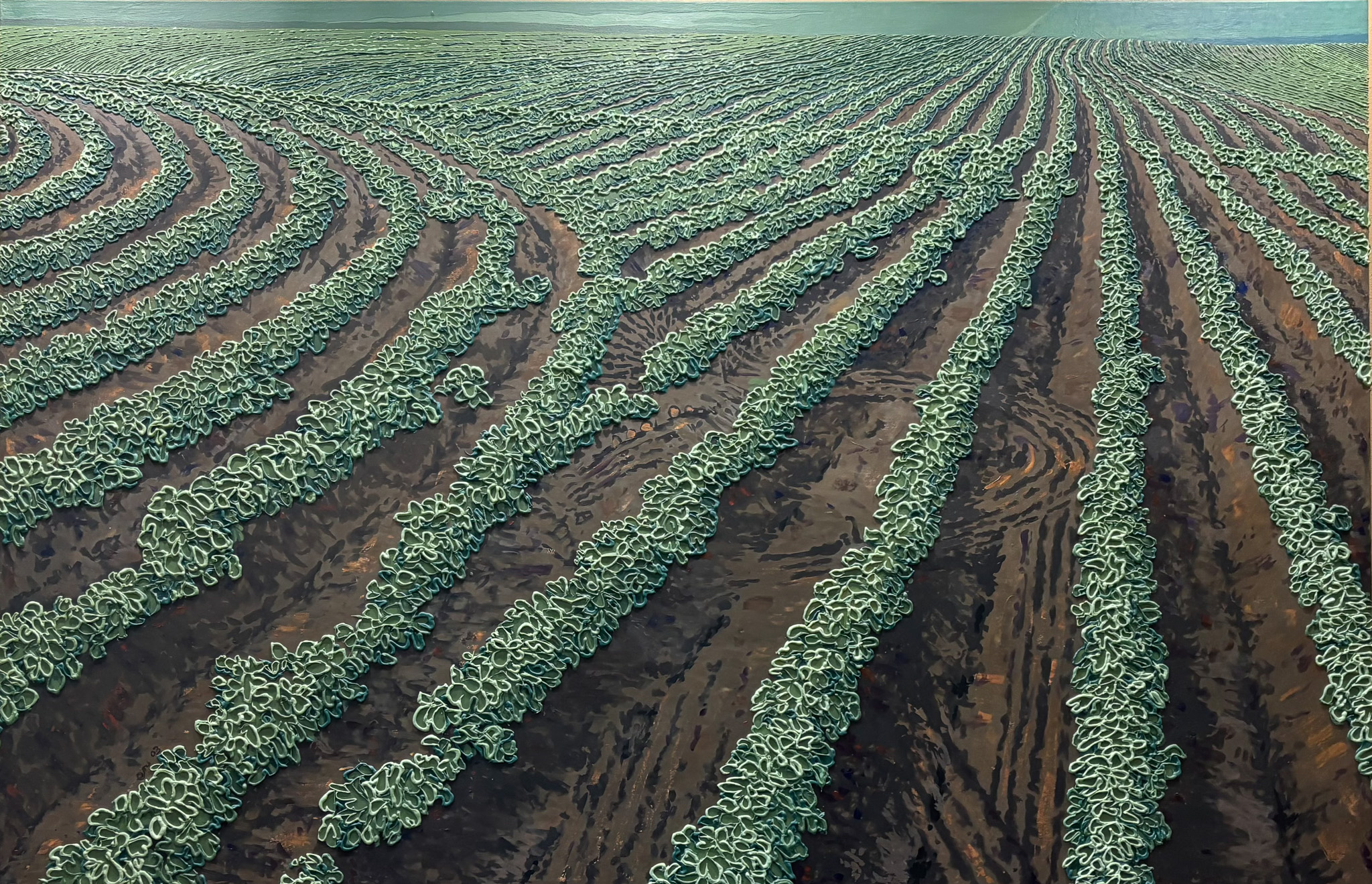
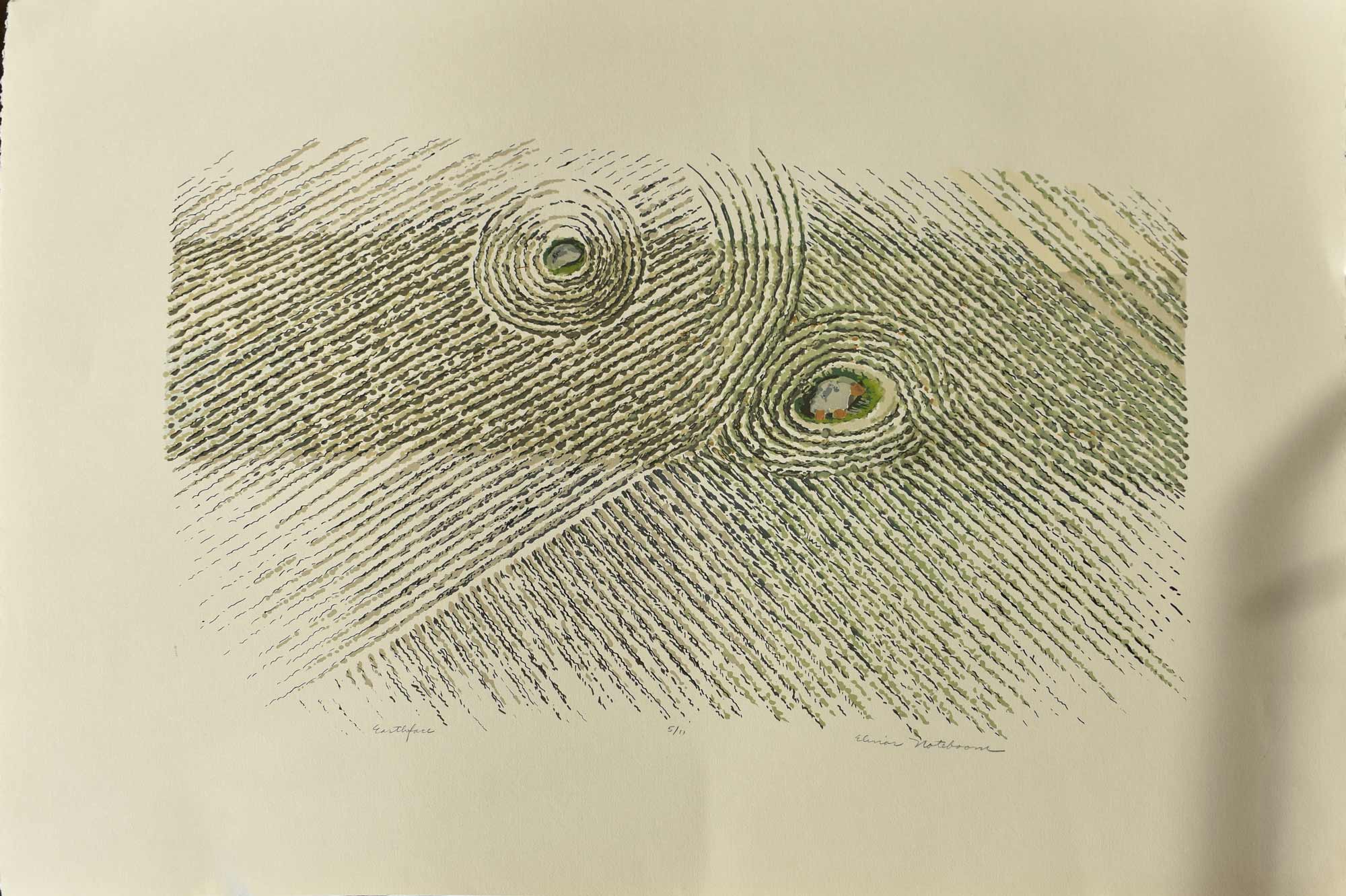
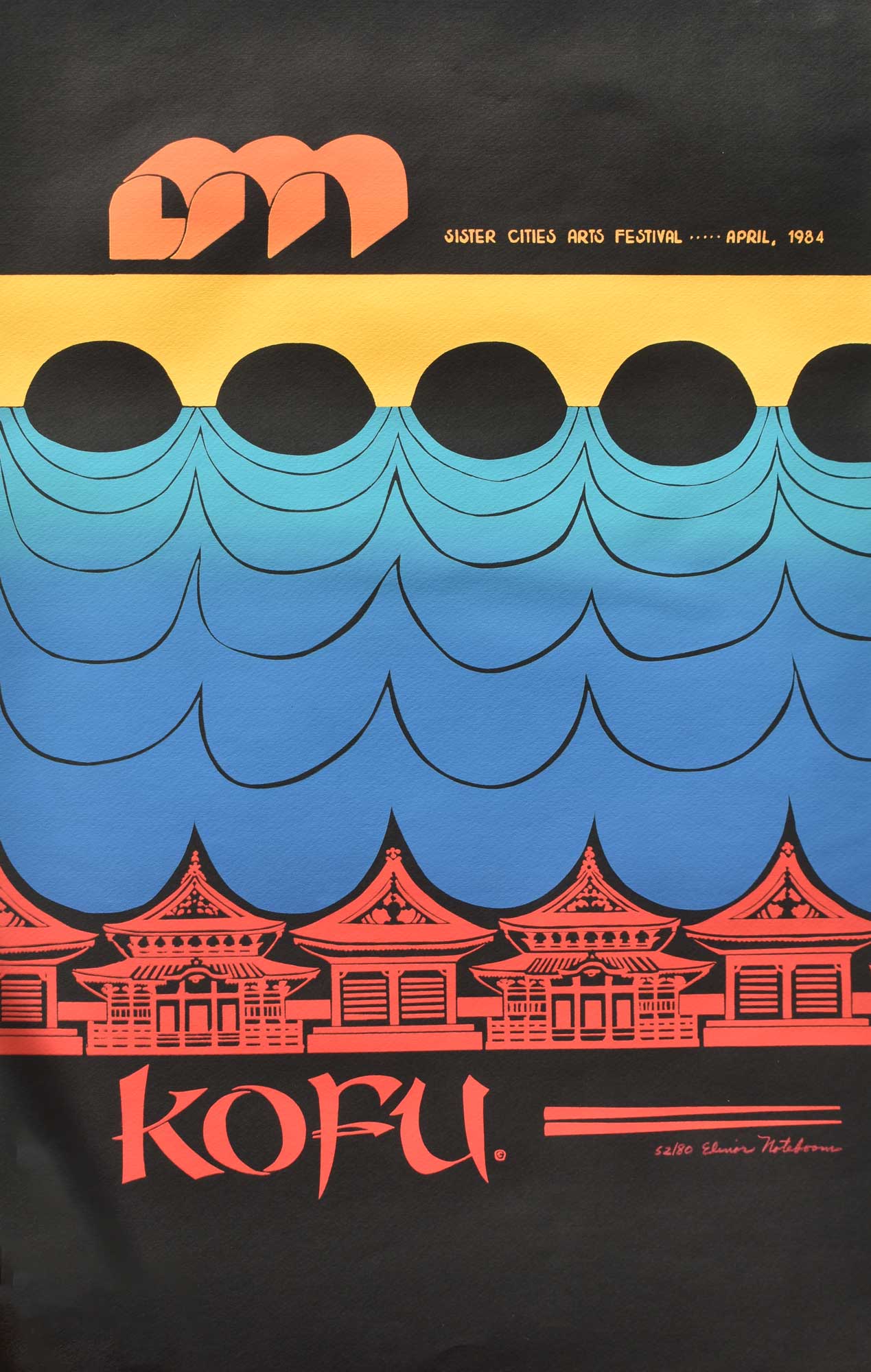
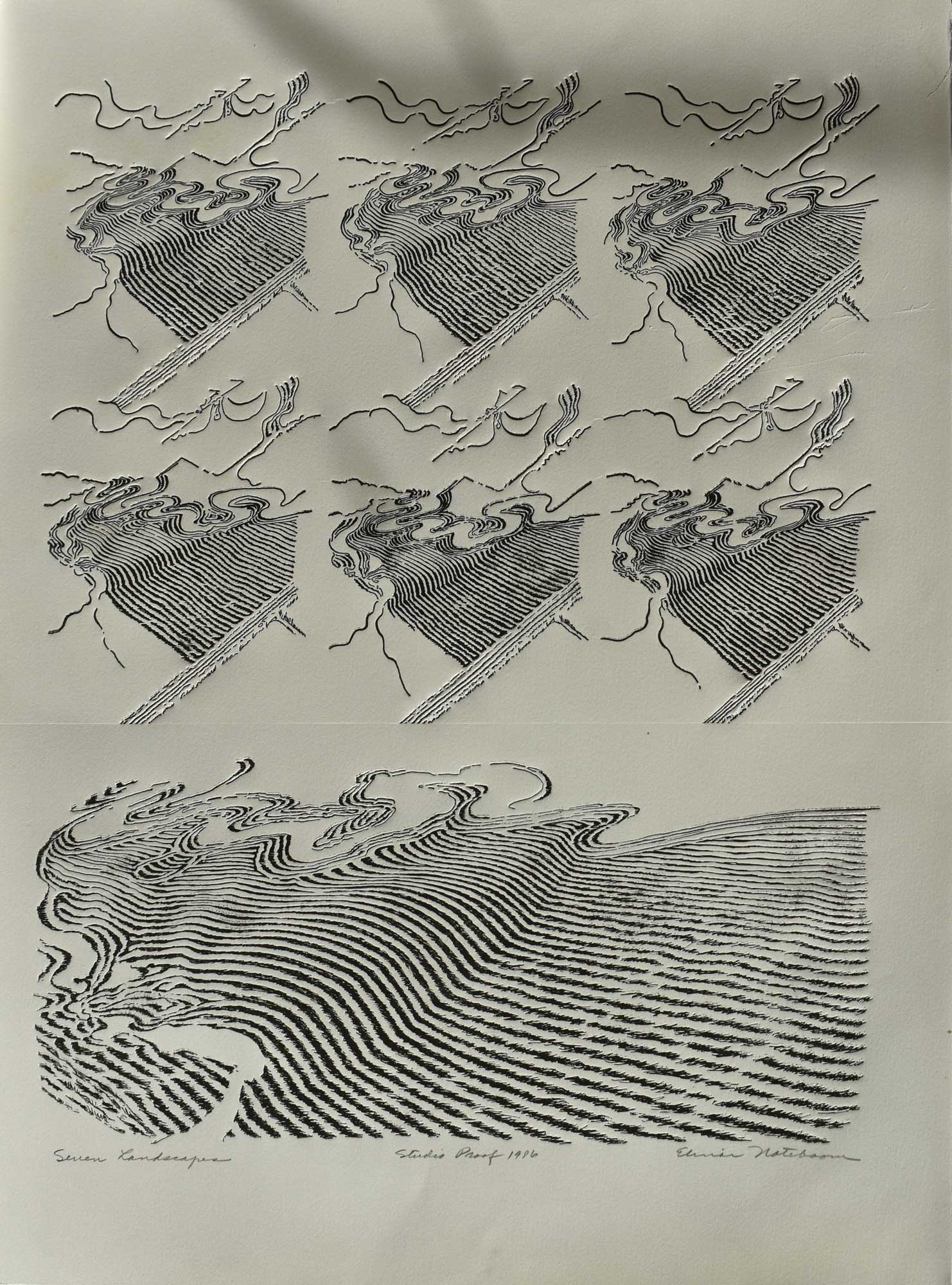
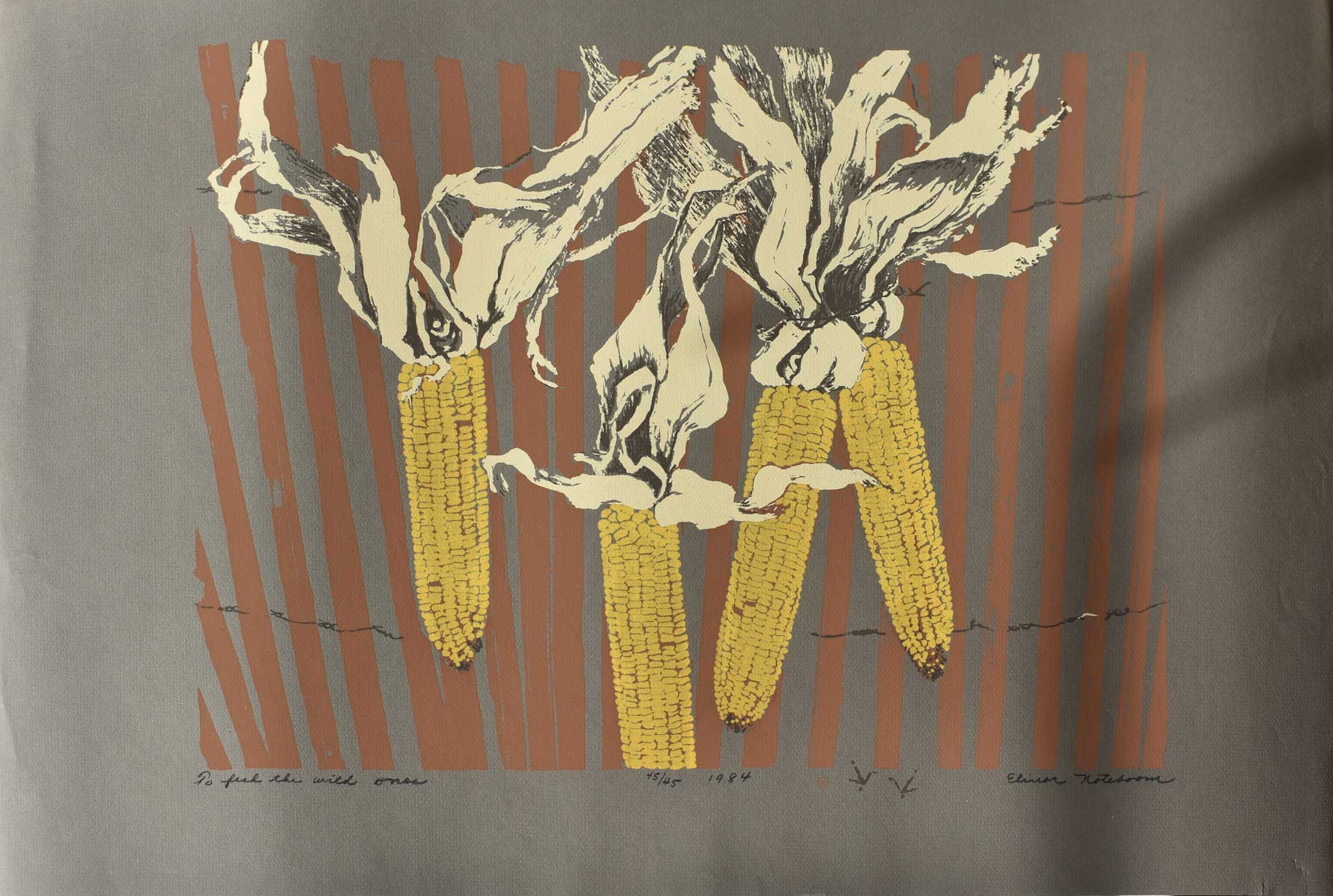
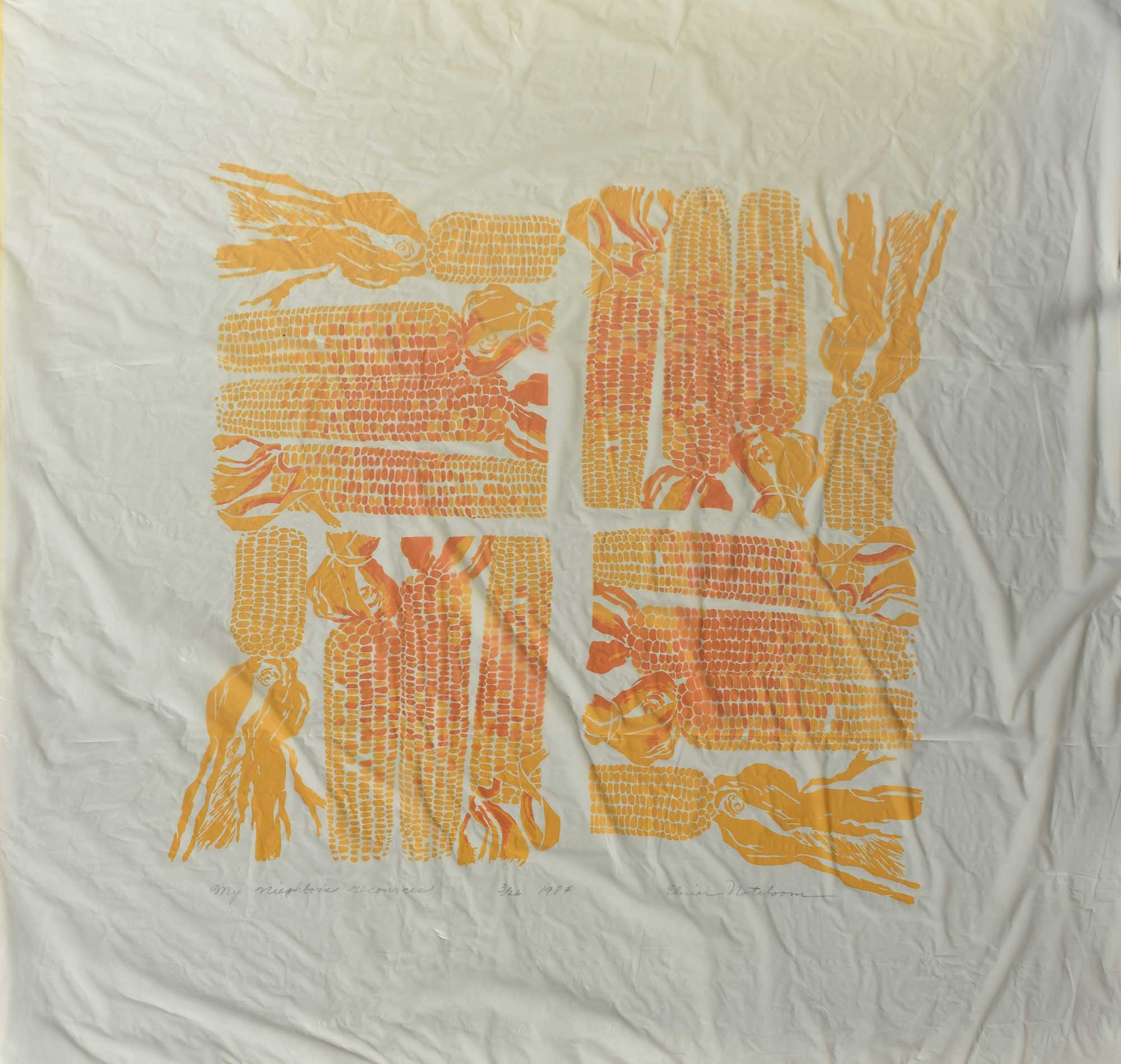
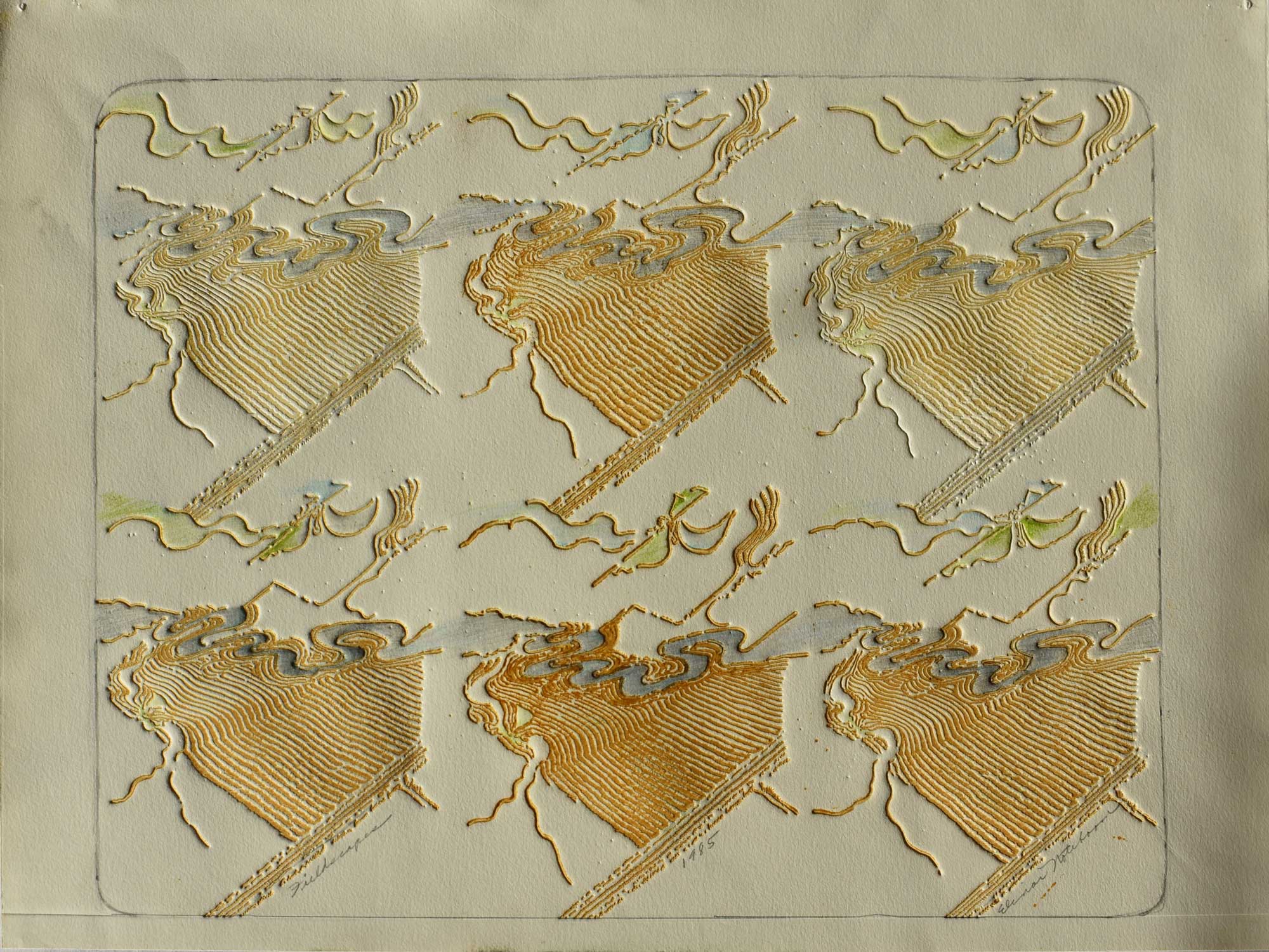
In April of 1984, Elinor traveled with other Iowa artists to Des Moines' sister city, Kofu, Japan. While in Japan, she was deeply inspired by the rock gardens and other scenery. After returning to Iowa, much of her work reflected the impact that this trip had on her. Below are her reflections on her trip and the exhibition that it inspired (Prolonged Tranquility).
In April of 1984, I traveled with other Iowa artists to Des Moines' sister city, Kofu, Japan. There we helped to celebrate the opening of a new art museum. The whole experience was rich with visually sensory delights, especially our visit to the Zen garden in Kyoto.
That summer as I drove through rural Iowa, I came to realize that there was a close connection between the atmospheric qualities surrounding the farmer's manicured fields with their mesmerizing rows of plants and the Japanese gardener's special world of carefully raked stone spaces. In some mysterious way, both evoked a kind of holistic interaction between my mind and eye, which relaxed my body and refreshed my spirits.
But no, these were very dissimilar perceptions. The motivations behind the Buddhist monk and the Iowa farmer are extraordinarily different. The Japanese educated class; its emperors and soldier-poets had designed their gardens with an elaborate aesthetic intent. Every stone was carefully selected, named, (Absolute Control Rock, Upholding Rock, Affection Stones, etc.) and placed for its thrust, size, and color. Every plant chosen, trained, and pruned to enhance the garden's balance. Each was precious with meaning. All were hidden behind walls where only the privileged might enter to feed his eye and be refreshed. How could a farmer hide his vast fields? His is a practical pursuit designed to feed his family and many others. All his activities are arranged for convenience, speed, and efficient production. Nothing is motivated by aesthetic considerations.
Still - my intuitions and feelings persisted. Wasn't the intimate Japanese raked stone garden designed to evoke a larger world? Both the farmer and gardener had to develop design solutions according to the distinct restraints of site, sun, and shade "the lay of the land". Limits of property determined borders. Both honored traditional ways, passing on their knowledge to younger generations. Both field and garden require heavy physical labor and body learning. Both used austere linear patterns to achieve their ends. Both used specially developed tools to achieve this uniformity of line. Both are dealing with repetitious disciplined control of natural elements. Both create an atmosphere of simplicity and naturalness, a harmony between man and nature that is calm and reassuring.
After much contemplation and reading, photographing the land from car, plane, and balloon, I decided to do a series of paintings and prints that would pull these two opposites together. ("beauty is the making ONE of opposites"- Eli Seigel).
I would be satisfied as to the success of this exhibition if viewers would sense the new oneness possible when opposite cultures are blended. Especially, I hope that many farmers, who love the land so fully, but cannot express it easily would come to a gallery for the first time: there to be affirmed by viewing what to their eyes and hearts is so familiar.